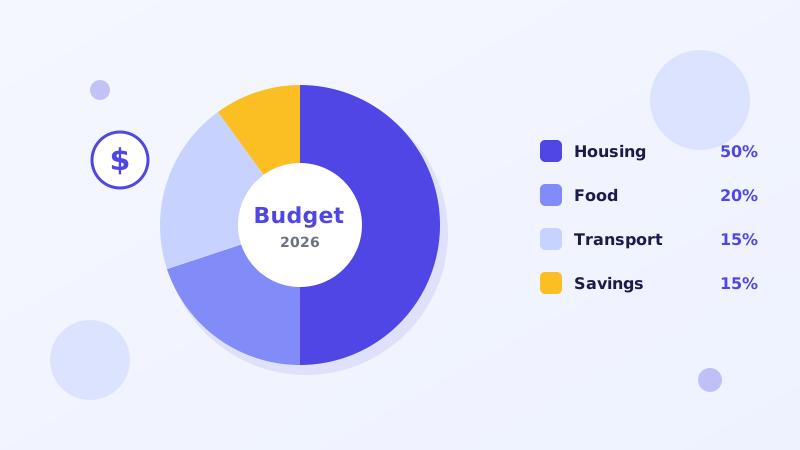
Recommended Monthly Spending by Category
| Category | Bucket | Suggested Max |
|---|
Rent / Housing Affordability
What is the 50/30/20 Rule?
Popularized by Senator Elizabeth Warren in her book All Your Worth, the 50/30/20 rule is a simple budgeting framework that divides your after-tax income into three buckets:
- 50% Needs — rent/mortgage, utilities, groceries, transportation, insurance, minimum debt payments.
- 30% Wants — dining out, entertainment, subscriptions, vacations, hobbies, new gadgets.
- 20% Savings & Debt — emergency fund, retirement, extra debt payments, investments.
The Difference Between Needs and Wants
It's harder than it sounds. Food is a need — takeout is a want. A reliable car is a need — a luxury car is a want. A phone is a need — the latest iPhone Pro Max upgrade every year is a want. Be honest. If it's optional and you could survive without it, it's a want.
When 50/30/20 Doesn't Work
In expensive cities (San Francisco, NYC, LA, Boston), housing alone can eat 40-50% of take-home pay. If so, adjust to a 60/20/20 or 70/20/10. The most important bucket is savings — never let it drop below 10%.
Other Budgeting Methods
Zero-Based Budgeting
Every dollar has a job. Income minus expenses equals zero. If you have $100 left at the end of the month, that $100 gets assigned to savings, debt, or a category. Popular tool: YNAB.
Envelope Method
Cash in physical (or digital) envelopes for each spending category. When the envelope is empty, you stop spending in that category. Works best for people who overspend on discretionary items.
Pay Yourself First
Skip the math. Automate a fixed percentage (say, 20%) of every paycheck into savings before you see it. Spend the rest however you want.